
Charleston isn’t like building in the middle of nowhere. We’ve got tight streets, old neighborhoods, flood zones, and a whole lot of history packed into a small area.
Fence permits exist mainly to make sure:
- Drivers can see clearly at corners
- Water can move during heavy rain (huge deal here)
- Utility easements stay accessible
- Fences don’t creep into public space
- New construction plays nice with zoning rules
I’ve installed fences in West Ashley that looked perfect… until the first big rain showed how water pooled behind solid panels. That’s why the city cares. These rules usually come from hard-earned lessons, not bureaucracy for fun.
When You Do Need a Permit for a Fence in Charleston SC?
Now here’s where I’ll be more specific than most blogs.
In the City of Charleston, a standard backyard fence that’s 6 feet or less usually does NOT need a full building permit.
You’ll likely need one if:
That said — and this is a big that said — you do need a permit when certain conditions apply.
- The fence is over 6 feet tall
- It’s going in the front yard
- It’s near sidewalks, streets, or intersections
- The property is in a historic district or BAR review area
- The fence affects drainage or stormwater flow
- It’s near or inside a utility easement
- Gates swing out toward public areas
- You’re in a flood zone and using solid panels
I’ve had customers on Daniel Island who didn’t need permits for backyard fences, and others downtown who absolutely did — same fence, different location. That’s Charleston in a nutshell.
When a Fence Permit Usually Is Not Required
Most homeowners are relieved to hear this part.
You generally don’t need a permit if:
- The fence is in the backyard
- It’s 6 feet or lower
- It’s fully on your property
- It doesn’t block drainage or visibility
- You’re not in a historic or design-review area
This covers a lot of typical privacy fences in places like James Island or parts of West Ashley.
Still — and I say this every time — rules can change by zoning overlay or neighborhood. It’s always smart to double-check before you dig.
In addition, before you finalize any plans, it’s worth understanding Charleston HOA Fence Rules 2026, so you don’t run into approval issues after the fact.
HOA Approval vs City Fence Permits – Not the Same Thing
This is where people get tripped up the most.
HOA approval does not replace city permits.
HOAs care about:
- Looks
- Materials
- Height
- Charleston Style Fence consistency
The city cares about:
- Safety
- Placement
- Drainage
- Zoning
I’ve had clients say, “My HOA already approved it,” only to find out the city still wanted review. Skipping permits? That’s a quick way to turn your dream fence into a nightmare.
Sometimes you need both. Sometimes just one. Knowing which applies to your property is key.
Flood Zones and Fence Permits in Charleston – This One Matters
If you’ve lived here long enough, you know water always wins.
In flood-prone areas:
- Solid fencing may be limited
- Open designs are often preferred
- Extra review is common
I’ve installed fences on James Island during hurricane season — trust me, flood rules aren’t just paperwork. A fence that blocks water can redirect it straight into your neighbor’s yard. That’s when problems start.
Read more: Fence Installation Cost Charleston
Historic & Design-Sensitive Areas
If your home is near downtown, parts of Mount Pleasant, or historic-adjacent neighborhoods, expect more scrutiny.
In these areas:
- Fence height may be restricted
- Materials and styles matter more
- Reviews take longer
The goal isn’t to stop fences — it’s to keep neighborhoods looking like Charleston, not Anywhere USA.
The Fence Permit Process in Charleston – What It’s Really Like
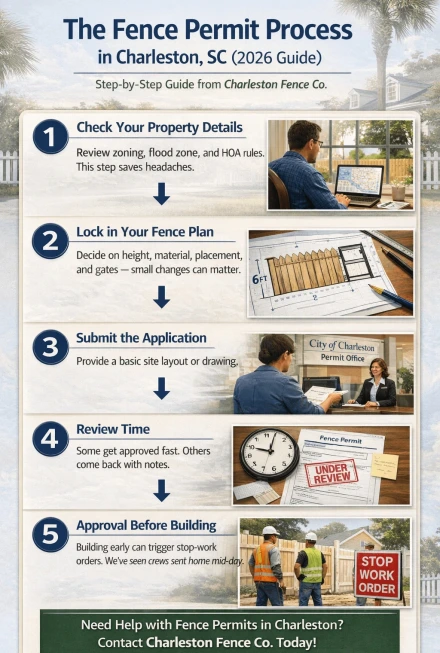
Most fence permits follow this path:
Step 1: Check your property details
Zoning, flood zone, HOA rules. This step saves headaches.
Step 2: Lock in your fence plan
Height, material, placement, gates — small changes can matter.
Step 3: Submit the application
Usually a basic site layout or drawing.
Step 4: Review time
Some get approved fast. Others come back with notes.
Step 5: Approval before building
Building early can trigger stop-work orders. I’ve seen crews sent home mid-day.
Planning ahead keeps everything smooth.
Common Fence Permit Mistakes I See – Over and Over
Honestly? These happen weekly:
- “It’s just a small fence”
- Assuming HOA approval is enough
- Building too close to sidewalks
- Ignoring flood zone maps
- Starting installation too early
Avoiding these saves money. And nerves.
Replacing an Existing Fence — Do You Need a Permit Again?
Sometimes yes.
If the new fence:
- Is taller
- Uses different materials
- Moves location
- Adds gates or structures
You might need approval again. Rebuilding exactly the same is usually fine. Changing the design? Different story.
How Local Fence Contractors Help With Permits
A lot of homeowners ask us to help navigate this — and that’s normal.
We regularly deal with:
- City requirements
- HOA coordination
- Flood-zone considerations
- Proper placement
You can apply yourself, but having someone who’s done it hundreds of times usually makes life easier.
A Quick Reality Check – Important
Rules can change. Zoning overlays shift. Historic boundaries expand.
Before you build, always confirm with:
- City of Charleston Zoning
- Official resources at charleston gov web
- Or a quick call to the zoning office
Five minutes of checking can save weeks of fixing.
Final Thoughts: Plan First, Build Once
So — do you need a permit for a fence in Charleston SC?
A lot of the time, no. But when you do, skipping it can cost you.
Understanding permits, HOA rules, and flood considerations before building helps your fence do what it’s supposed to do — add privacy, security, and value. Not stress. Just contact Holy City Fence now for any queries regarding your fence.