
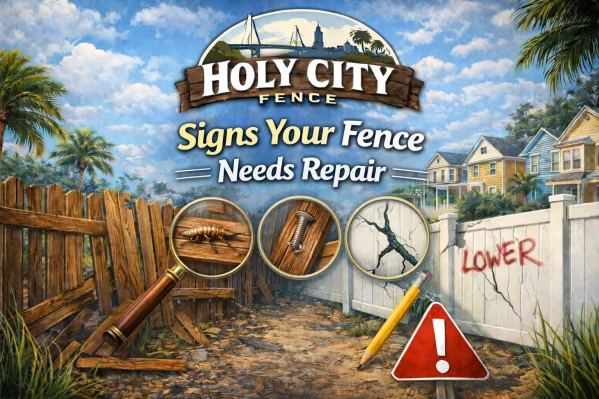
Charleston storms don’t just test fences with wind. It’s the combination that causes trouble:
- Strong gusts pushing against panels
- Heavy rain soaking already sandy soil
- High humidity that never fully dries out wood
- Salt air accelerating corrosion on metal
A fence can survive calm weather for years and still fail during one bad storm because the underlying weaknesses were already there.
That’s why storm season doesn’t create fence problems — it reveals them.
If you’re already dealing with ongoing issues, we recommend reviewing Common Fence Problems in Charleston SC to understand how local conditions contribute to long-term fence damage.
Fence Posts That Feel Loose or Wobbly
This is one of the clearest warning signs we see — and one of the most ignored signs your fence needs repair.
If you grab a fence post and it shifts — even slightly — that’s a problem. Posts are the backbone of the entire fence. When they move, everything attached to them is at risk.
In Charleston, this usually happens because:
- Posts weren’t set deep enough
- Soil stays saturated after rain
- Concrete footings weren’t installed properly
- Wood posts are beginning to rot below ground
Why storms make this worse:
Once the soil is fully soaked, wind doesn’t need much force to push posts out of alignment.
What to do now:
Have loose posts reset or replaced before storm season. Waiting almost always leads to leaning sections or full collapse.
Fence Sections Starting to Lean
A leaning fence is never just a cosmetic issue.
It’s usually a sign that:
- One or more posts are failing
- Soil erosion is undermining the base
- Weight and wind pressure are no longer balanced
After storms, we often hear, “It was leaning a little before, but the storm finished it off.”
That’s exactly how it happens.
Fix it early:
Resetting posts before storms hit is far easier than rebuilding an entire section afterward.
Wood That Looks Soft, Dark, or Splintered
Charleston’s humidity is tough on wood. Even pressure-treated lumber isn’t immune forever.
Early signs of rot include:
- Darkened areas near the ground
- Soft spots you can press with a screwdriver
- Splintering boards
- Mold or mildew that keeps coming back
Rot usually starts where you can’t see it — at the base of posts or behind panels.
Why storms accelerate rot:
Extended moisture plus wind stress speeds up failure. A rotting post may survive calm weather but snap or loosen during storms.
If you’re seeing these signs, repairs now can prevent larger replacements later.
Rust on Metal Fences or Hardware
Salt air doesn’t stop at the beach. It moves inland — and metal fences feel it.
Rust often shows up first on:
- Hinges
- Latches
- Screws and bolts
- Post bases
Surface rust might not look serious, but once corrosion starts, it spreads.
Storm risk:
High winds and vibration put stress on already weakened metal components. Rusted hardware is far more likely to fail under pressure.
Best move:
Clean, treat, and replace rusted parts before storm season, not after.
Gates That Sag or Don’t Close Properly
Gates take more abuse than any other part of a fence.
If your gate:
- Drags on the ground
- Doesn’t line up with the latch
- Swings open or closed on its own
…it’s telling you something is shifting.
Often the issue isn’t the gate itself — it’s the post holding it.
Why this matters before storms:
Once a gate post fails, the surrounding Charleston Fence usually follows.
Reinforcing or resetting gate posts now is one of the smartest pre-storm fixes you can make.
Cracked or Damaged Panels – Wood or Vinyl
Cracks don’t stay small during storms.
Wood panels with splits allow wind to push through unevenly, increasing stress on fasteners. Vinyl panels with hairline cracks can snap under pressure or flying debris.
Before storm season:
Replace cracked panels instead of hoping they’ll “make it through one more year.” They usually don’t. To choose between wood or vinyl, visit our blog page.
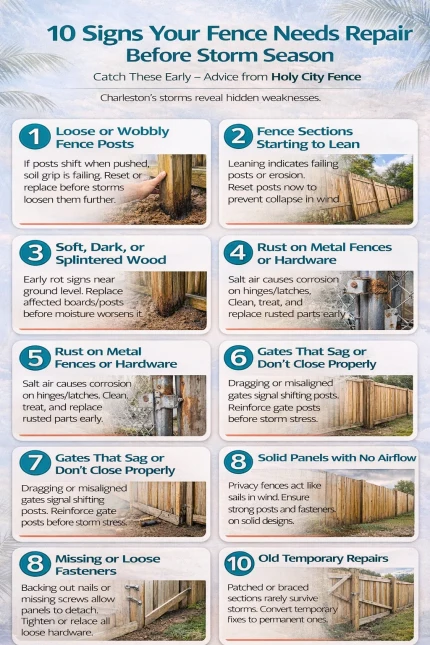
Missing or Loose Fasteners
Nails backing out. Screws missing. Brackets pulling away.
These are easy to overlook — and easy to fix — but they cause big problems during storms.
A single loose connection can allow an entire panel to twist or detach when wind hits.
Quick prevention tip:
Walk your fence line and tighten or replace fasteners now. It’s one of the simplest storm-prep steps you can take.
Fence Panels Acting Like Solid Wind Barriers
Solid privacy fences look great, but they catch wind like a sail.
If your fence:
- Has no airflow gaps
- Faces open areas or streets
- Has older panels
…it may be under more stress than you realize.
This doesn’t mean privacy fences are bad — it means they need strong posts, secure fasteners, and good fence installation.
Storm season exposes weak points fast.
Drainage Problems Near the Fence Line
Water pooling near fence posts is a major red flag.
Standing water:
- Softens soil
- Undermines footings
- Accelerates rot
After storms, we often see fences leaning not because of wind — but because the ground beneath them gave way.
If drainage issues already exist, address them before storms arrive.
“Temporary” Repairs That Never Got Revisited
We see this all the time.
A post was braced.
A panel was patched.
The gate was “good enough for now.”
Temporary fixes tend to fail during storms.
If you’ve been meaning to come back and “do it right,” storm season is your deadline.
Repair Now or Wait? Here’s the Honest Answer
Waiting rarely saves money. You can also check out best fence Charleston weather.
Small fence repairs done early usually:
- Cost less
- Take less time
- Prevent emergency situations
After storms, materials cost more, schedules fill up fast, and damage spreads.
If you’re weighing costs, it helps to understand what full repairs or replacements involve locally. Our breakdown in How Much Does Fence Installation Cost in Charleston SC? explains pricing factors and what influences cost in this area.
A Local Reminder Before Storm Season
Charleston weather isn’t forgiving — but it is predictable.
We know the storms are coming.
We know the soil will stay wet.
We know the wind will test everything.
The fences that survive aren’t lucky. They’re prepared.
At Holy City Fence, we’ve repaired and rebuilt fences after enough storm seasons to recognize the patterns. The fences that failed almost always showed warning signs beforehand.
Final Thoughts: Don’t Let a Storm Be the First Test
Your fence shouldn’t meet its first real test during a storm.
If you’re noticing any of the signs your fence needs repair, now is the time to act. Small repairs today can prevent big problems tomorrow.
And if you want a deeper understanding of what typically goes wrong with fences in this area, take a look at Common Fence Problems in Charleston SC — it breaks down how local conditions affect fences over time.Storm season is coming whether we’re ready or not.
Your fence can be.