
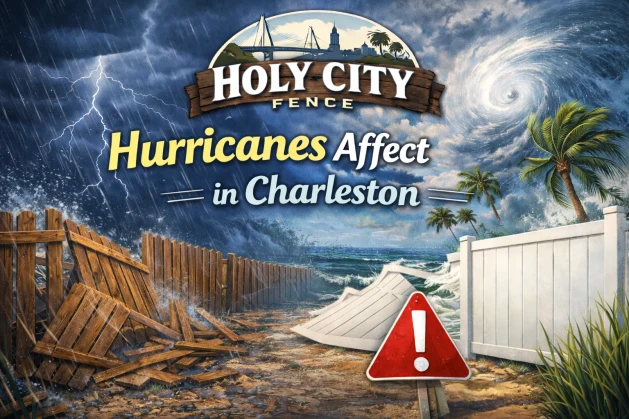
Charleston storms aren’t just about wind speed. It’s the combination that causes problems.
You’ve got:
- Sustained coastal winds
- Sudden gusts
- Saturated, sandy soil
- Flying debris
- Water pushing where it normally doesn’t
We’ve seen fences survive 70-mph winds and collapse in much weaker storms simply because the ground underneath gave way. Around James Island and West Ashley especially, once the soil gets soaked, posts lose their grip fast.
That’s usually where failure starts — below ground, not above it.
The Most Common Ways Hurricanes Affect Fences in Charleston
Fence Panels Acting Like Sails
Solid fences catch wind. Period.
Privacy fences, especially older wood ones, can act like a wall when strong gusts hit. Once pressure builds, panels crack, fasteners fail, or entire sections come down.
We’ve walked properties after storms where the fence looked fine… until you noticed every other panel was twisted or split. That’s wind load at work.
Posts Pulling Out of Saturated Soil
Charleston soil doesn’t drain like hard clay. When hurricanes dump rain, the ground softens quickly.
If posts aren’t set deep enough — or weren’t reinforced properly — the wind doesn’t need much help pulling them loose. This is one of the most common failures we see after storms.
A fence can look sturdy for years, then fail in one bad weather weekend.
Gates Becoming Weak Points
Gates take more abuse than any other part of a fence.
Heavy gates swing, latch, and flex during high winds. If hinges or posts aren’t reinforced, gates are often the first thing to fail. Once a gate goes, the rest of the fence usually follows.
Flying Debris Damage
Tree limbs, loose outdoor furniture, and even trash bins become projectiles during hurricanes.
We’ve repaired fences punctured by things homeowners never expected — patio chairs, grill covers, roofing shingles. Wind doesn’t discriminate.
Why Some Fences Survive Storms Better Than Others
This is where design choices matter.
Two fences on the same street can experience the same storm and end up very differently. The difference usually comes down to:
- Post depth and footing
- Fence style (solid vs open)
- Material choice
- Installation quality
- Whether drainage was considered
It’s rarely luck.
Fence Styles That Handle Hurricanes Better in Charleston
Open or Semi-Open Designs
Fences that allow wind to pass through perform better during storms.
Aluminum fencing, spaced pickets, or shadowbox wood designs reduce pressure buildup. Wind moves through instead of pushing against a solid wall.
This doesn’t mean you can’t have privacy — it just means balancing airflow with coverage.
Aluminum Fencing
Aluminum doesn’t rot, doesn’t absorb water, and flexes slightly under pressure.
For properties exposed to frequent wind or near marsh areas, aluminum fencing consistently outperforms wood during hurricanes. We’ve seen aluminum fences bent slightly and still standing when nearby wood fences were completely gone.
Properly Built Wood Fences (Yes, They Can Work)
Wood fences aren’t doomed — but they have to be built correctly for Charleston.
That means:
- Pressure-treated posts rated for ground contact
- Proper spacing
- Reinforced corners
- Adequate drainage
Most storm failures we see weren’t caused by “bad wood,” but by shortcuts taken years earlier.
How Fence Installation Choices Affect Hurricane Damage?
This is where prevention really starts.
Post Depth Matters More Than People Think
In Charleston soil, shallow posts are a gamble.
Deeper posts with concrete footings give fences a fighting chance during storms. When posts stay put, panels usually survive.
Drainage Isn’t Optional Here
If water pools around fence posts, storms will expose that weakness.
We’ve seen fences installed perfectly straight — but without considering drainage paths — fail during the first major storm. Water undermines everything.
Permits and Placement Can Actually Protect Your Fence
Sometimes, city rules about setbacks, easements, or flood zones exist because those areas are more vulnerable during storms. Building too close to drainage paths or low points increases risk.
If you haven’t already, it’s worth understanding Do I Need a Permit for a Fence in Charleston SC? before rebuilding after storm damage. Skipping that step can lead to repeat problems.
Also read: Fence Installation Cost in Charleston Cost?
What Homeowners Can Do Before the Next Hurricane Season?
You don’t have to wait for damage to act.
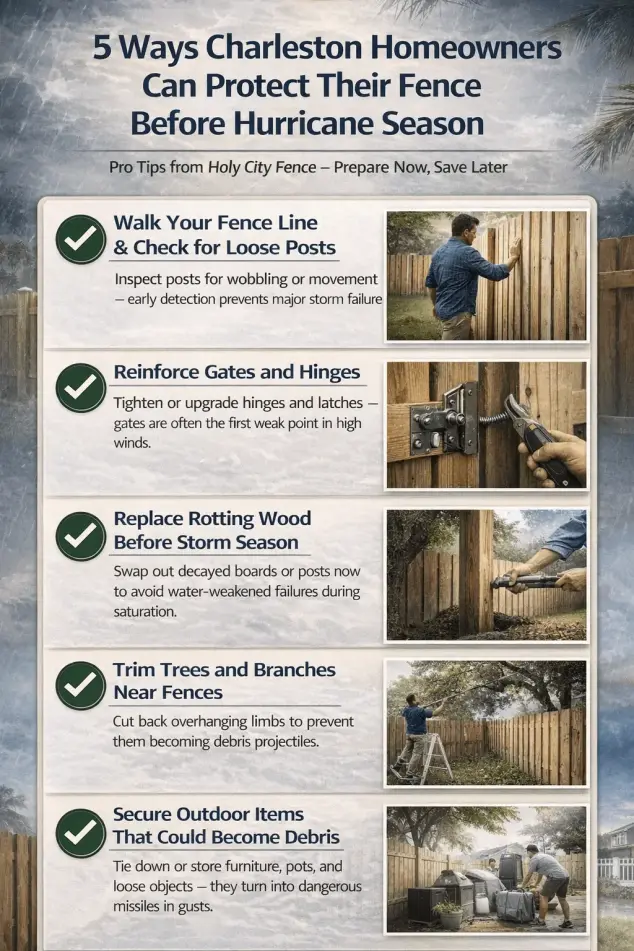
Here’s what we usually recommend:
- Walk your fence line and check for loose posts
- Reinforce gates and hinges
- Replace rotting wood before storm season
- Trim trees and branches near fences
- Secure outdoor items that could become debris
Small fixes now prevent big repairs later.
After a Hurricane: Repair or Replace?
This depends on the extent of damage.
If only panels are damaged and posts are solid, repairs usually make sense. But if posts are leaning, rotting, or pulled loose, patching panels is just a temporary fix.
We’ve seen homeowners repair the same fence after every storm because the underlying issue was never addressed.
Sometimes replacement is the cheaper option long-term. In addition, you can also read our blog on Signs Your Fence Needs Repair.
Storm Damage, Insurance, and Timing
One quick note: after major storms, demand spikes.
Fence repairs take longer. Materials get delayed. Crews get booked out. If insurance is involved, documentation matters.
Photos, measurements, and clear descriptions help speed things up.
A Local Perspective From Years of Storm Seasons
At Holy City Fence, we’ve repaired and rebuilt fences after tropical storms, hurricanes, and those “it wasn’t supposed to be that bad” wind events.
The biggest lesson? Most storm damage isn’t random. It’s predictable.
When fences are built with Charleston’s wind, soil, and water conditions in mind, they stand a much better chance of surviving whatever the season throws at them.
Final Thoughts
Hurricanes will always be part of life in Charleston. Fences don’t have to be disposable because of it.
When you understand how hurricanes affect fences in Charleston, you can make smarter decisions — about design, installation, placement, and maintenance.
Preparation doesn’t eliminate risk. But it dramatically reduces damage.